After the Bale: How US Paper Buyers Can Vet MRF Compatibility Before Signing
Recycling is not a material property. It is a system outcome shaped by the equipment inside a materials recovery facility (MRF), the contracts that govern where bales travel, and the willingness of an end market to accept what comes out. For US paper buyers in 2026, that distinction matters because a packaging specification can pass a design guideline and still fail at the curb. The question is not simply whether a package is recyclable in theory, but whether the MRF serving the customer’s address can sort it, bale it, and sell it.
Recyclability Is a Local Variable
The United States has no single national recycling standard. The Federal Trade Commission’s Green Guides provide direction on environmental marketing claims, but they do not certify that a specific package will be accepted in a specific community. Local programs, hauler contracts, MRF equipment, and end markets determine the practical answer.
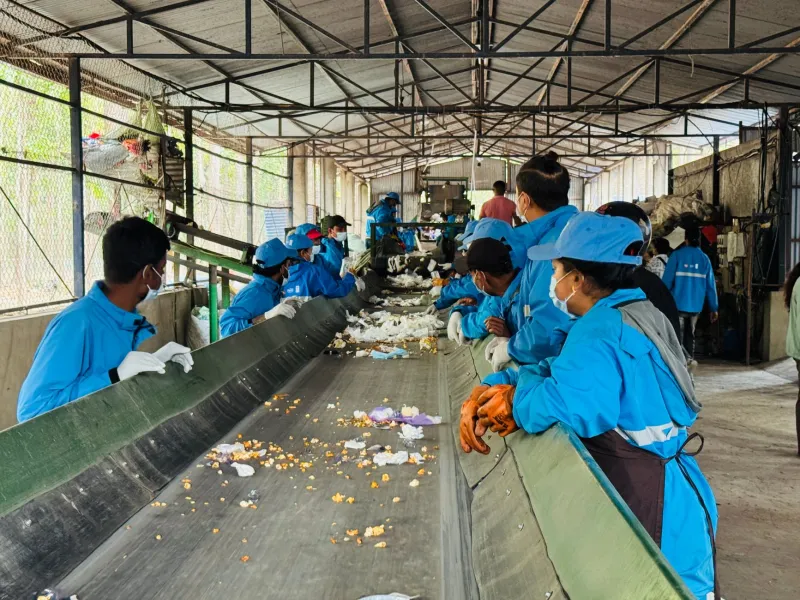
Single-stream collection has made participation easier, but it has also increased contamination. MRFs rely on a combination of screens, ballistic separators, optical sorters, magnets, eddy currents, and manual pickers. Paper is not one uniform stream. Old corrugated containers, mixed paper, office paper, and molded fiber behave differently in sorting and repulping. Coatings, adhesives, windows, and food residue can push a package from valuable feedstock to residue.
A polycoated paper cup may be accepted in one city and rejected in a neighboring jurisdiction. A molded fiber takeout container may be welcomed by a facility with a composting or fiber end market and rejected by one without it. A paper mailer with plastic padding may look like paper at the curbside but behave like a contaminant at the MRF. Procurement teams need to treat acceptance as conditional, not universal.
Read Your Package Specification Like a MRF Operator
The most useful exercise is to translate a bill of materials into sorting questions. A supplier’s marketing language is not enough. Buyers should ask how the package will present itself to a MRF after it has been flattened, crushed, and mixed with other materials.
- Fiber grade and format: Is the package made from old corrugated containers, mixed paper, or a specialty fiber? Is it flat or three-dimensional? Can it be separated from other materials by common MRF equipment?
- Barrier and coating: Does the package use polyethylene, wax, silicone, or a dispersion coating? Is the coating repulpable in a standard mill? Has the supplier provided third-party test data?
- Adhesives and labels: Will the adhesive remain tacky and clog screens? Are labels paper-based or plastic? Does the package include a plastic window or a metallic closure?
- Contamination risk: Will the package carry food residue, oil, or moisture that reduces fiber recovery? Does the design trap liquid or grease?
- Size and shape: Is the package too small to be captured by screens? Does it nest or flatten in a way that interferes with sorting?
- Color and print: Are dark dyes, metallic inks, or foil stamping likely to affect repulpability or end-market value?
- End-of-life instructions: Do the on-pack instructions match the actual acceptance list of the receiving MRF?
Ask for repulpability and recyclability test reports, not just a claim that the package is 100% recyclable. A laboratory protocol may not reflect the receiving facility’s equipment. The more specific the evidence, the more useful it is in a supplier negotiation.
The State-Level Layer
State policy adds another layer of variability. California’s SB 54 is reshaping packaging producer responsibility and recyclability labeling. Oregon’s Recycling Modernization Act is advancing a more uniform statewide collection list. Colorado, Maine, Minnesota, and Washington have their own producer responsibility or recycling programs at different stages of implementation. These laws can create useful baselines, but they do not eliminate the need to check local acceptance.
For a multi-state product launch, build a compatibility matrix before the packaging is finalized. The matrix should identify the state rule, the local jurisdiction, the MRF operator, the accepted paper grades, coating restrictions, labeling requirements, and the end market for recovered fiber.
| Checkpoint | What to request |
|---|---|
| State EPR or labeling rule | Covered-material category and applicable labeling requirements |
| Local acceptance list | Current curbside and drop-off list from the city or county |
| MRF identity | Facility name, equipment profile, and known end markets |
| Hauler instructions | Contamination thresholds and rejection policy |
| Supplier evidence | Repulpability test, coating chemistry, and adhesive data |
| Pilot results | Sort test at the actual MRF or a representative facility |
A Contract Checklist for MRF Compatibility
Procurement clauses should convert these questions into obligations. A supplier contract can require evidence, notice, and remedies without turning every packaging decision into a research project.
- Name the receiving facility. Require the supplier to identify the MRF or MRFs that serve the target markets, not merely the city or state.
- Get acceptance in writing. Ask for the current accepted-materials list and the date it was last updated.
- Pilot before scale. Run a sample through the actual MRF or a representative facility and document the results.
- Set contamination thresholds. Define what percentage of a shipment or packaging format may be rejected before corrective action is required.
- Include a change-of-spec clause. If the supplier changes a coating, adhesive, or fiber source, require advance notice and new compatibility evidence.
- Require reporting. Ask for annual confirmation that the package still matches the receiving MRF’s acceptance list.
- Align labels with local rules. Reject on-pack recycling instructions that conflict with the destination market’s program.
- Plan for multi-state distribution. Maintain a state-by-state matrix and flag any market where the package is not accepted.
- Audit annually. MRF equipment, end markets, and local contracts change; a specification that worked in 2025 may not work in 2026.
- Define remediation. Specify who pays for redesign, relabeling, or disposal if a package is repeatedly rejected.
When the MRF Says No
Rejection is not a dead end. It is a design signal. Buyers can shift to a mono-material paper format, remove plastic windows or laminated labels, switch to a repulpable coating, reduce package size, or choose a fiber grade with a stronger local end market. In some cases, the right response is to change the message: if the package is not accepted locally, the supplier should not imply that it is widely recyclable.
The sorting gap will not close overnight. But procurement teams can narrow it by asking better questions before signature, testing at the facility that will actually receive the package, and writing contracts that reflect how recycling works in practice rather than how it looks in a brochure.