Bale Weather: Contracting for OCC Volatility in 2026
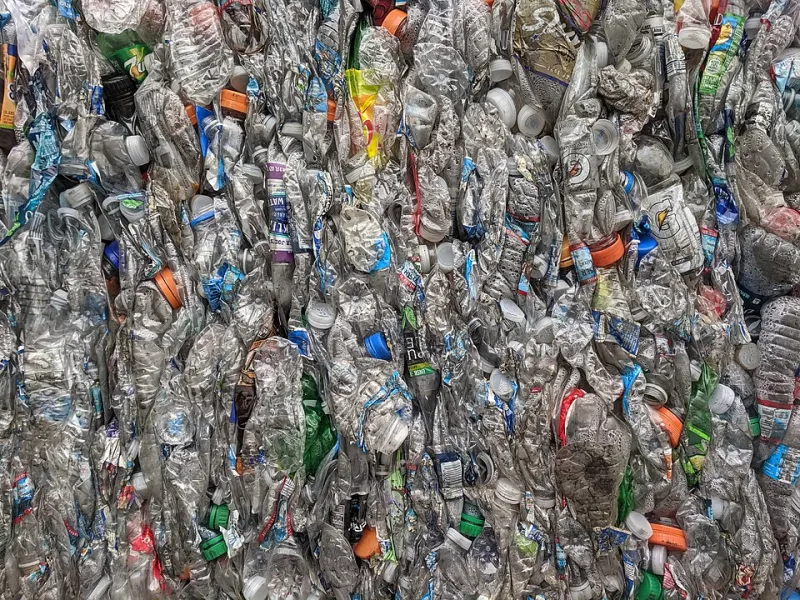
Photo: Grendelkhan, CC BY-SA 4.0, via Wikimedia Commons
In many procurement files, recycled fiber appears as a fixed number carried forward from last year's quote. That treatment is convenient, but it is not accurate. Old corrugated containers, or OCC, trade in a market shaped by mill capacity, export demand, collection rates, and the quality of what arrives at the baler. For US paper buyers preparing contracts for 2026 and beyond, the useful question is not whether OCC will rise or fall. It is whether the contract is built to absorb movement without obscuring who carries the risk.
Why OCC Deserves a Line of Its Own
OCC is the dominant recovered paper grade behind new containerboard, and it sits upstream of many corrugated boxes, mailers, and retail packaging formats. Mixed paper is a different grade with different end markets, contamination profiles, and price behavior. Treating all recovered fiber as one input can hide the exposure that matters most to a packaging buyer.
When a supplier quotes a fixed price for a paper-based package, recycled fiber risk does not disappear. It is either priced into the quote, absorbed by the supplier, or left to surface later as a surcharge. None of those outcomes is inherently wrong. The problem is when the mechanism is invisible. A 2026 contract should state plainly which fiber grade is being priced, which reference point is being used, and how often the price can move.
Three Signals Behind a Bale Price
OCC prices are local in practice and national in conversation. Buyers should read both layers.
First, mill capacity and downtime matter. New containerboard capacity, mill conversions, maintenance outages, and closures can change demand for recovered fiber in a region. A mill starting up or coming back online may tighten the local bale market; a prolonged outage may loosen it. National headlines rarely capture that regional basis.
Second, export demand matters. US recovered fiber moves into international markets, and shipping costs, overseas mill demand, and policy changes can redirect bales. When export outlets are strong, domestic buyers may need to compete more aggressively for supply. When export demand softens, regional prices may ease, but quality requirements do not necessarily follow.
Third, collection and quality matter. OCC generation depends on retail, industrial, and e-commerce activity. MRF throughput, labor availability, weather, and contamination rates affect how much usable fiber reaches the market. A tight bale market is not only a price event; it is a quality event. Buyers who ignore contamination specifications may find that a low headline price comes with higher reject rates and weaker runnability.
Index-Linked Pricing Without Passive Exposure
Index-linked pricing can be a sensible tool, but it is not a hands-off solution. The contract needs a precise formula. Define the grade, the index publication, the reference period, the adjustment frequency, and the treatment of freight. A vague reference to market pricing invites disputes when the market turns.
A workable structure often includes a base price, a periodic adjustment tied to a named index, and a collar that shares movement between buyer and supplier. The collar should be negotiated with the actual cost exposure in mind, not copied from a template. Quarterly adjustment may suit some packaging programs; monthly adjustment may be too noisy for others. The key is to match the mechanism to the buying cycle and to the supplier's ability to pass through cost changes.
Buyers should also require reconciliation rights. If an index is discontinued or its methodology changes, the contract should name a fallback. If a supplier claims an index movement, the buyer should be able to audit the calculation. Index-linked pricing works best when both parties can verify the math without renegotiating the principle.
Supply Clauses That Match Fiber Reality
Price is only one half of OCC risk. The other half is availability. When bales tighten, suppliers allocate. A 2026 contract should describe how allocation will work before the tightness arrives.
Useful clauses include volume commitments by grade and location, a supply assurance plan, notice requirements for force majeure or mill outages, and a clear process for approving substitute fiber. Substitution language should not be so broad that a recycled-content specification becomes optional. Nor should it be so rigid that a supplier cannot respond to a genuine regional disruption. The contract should distinguish between a temporary quality variance and a permanent change in fiber source.
Buyers with recycled-content commitments should also ask how the supplier will source recovered fiber if OCC becomes expensive relative to virgin alternatives. A commitment that exists only when recycled fiber is cheap is not a procurement strategy. It is a marketing claim waiting for a market test.
Sustainability Claims Need a Volatility Test
Recycled content is often presented as a stable attribute of a paper product. In practice, it depends on a supply chain that responds to price. If the contract does not specify verification, recordkeeping, and consequences for substitution, a recycled-content claim may become difficult to defend.
Procurement teams should require recycled content to be stated by weight, supported by chain-of-custody records, and checked against the grade actually delivered. They should also avoid implying that recycled content automatically delivers a fixed environmental result. Fiber sourcing, transport distance, deinking, and mill energy all affect the outcome. The defensible claim is the one the contract can document, not the one the brochure can summarize.
A Practical 2026 Contract Agenda
Before renewing paper packaging agreements, US buyers should map OCC exposure by grade and region, choose a credible index and fallback, set a collar that both parties understand, and write supply assurance into the agreement. They should separate OCC from mixed paper, require reconciliation rights, and test every recycled-content claim against the possibility of substitution.
OCC volatility is not a reason to avoid recycled fiber. It is a reason to contract for it with clear eyes. The buyers who fare best in 2026 will be those who treat bale prices as a signal to be managed, not a line item to be ignored.