Two Ledgers, One Label: Separating Certified Fiber From Recycled Content in US Paper Contracts
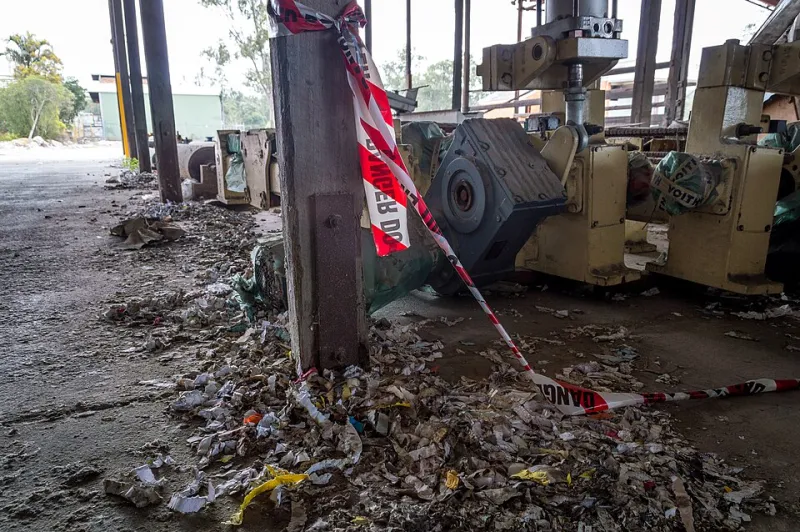
Photo: darkday., CC BY 2.0, via Wikimedia Commons
Ask a US paper supplier whether a linerboard grade meets your recycled-content requirement and you may get a certification logo in reply. Ask whether it meets your certified-sourcing requirement and you may get the same logo. That is the tell. Two different claims are being answered with a single artifact, and the procurement file that results is weaker than either claim standing alone.
Both claims matter, and both are verifiable. But they are recorded in separate ledgers, governed by separate standards, and policed by separate mechanisms. Treating them as interchangeable is one of the quieter routes by which greenwashing enters a 2026 specification.
Two claims, two accounting systems
Forest Stewardship Council certification is a chain-of-custody system. It tracks how certified, recycled, and controlled material moves from forest and recovery streams through mills, converters, and printers to a finished product. Its core question is provenance: where did the fiber come from, and can the trail be documented?
A recycled-content claim answers a different question: what is this specific product made of? That claim is substantiated under consumer-protection rules rather than a certification scheme, and it is measured by weight of input material, not by a mark on a quote sheet.
A product can hold one claim without the other. A certified converter can run a job with no post-consumer fiber at all. A mill can achieve high post-consumer content in a grade that carries no chain-of-custody certificate. Neither outcome is misconduct — but specifying one and assuming the other is a procurement error, and it is one that purchasing teams inherit year after year because the paperwork looks complete.
What FSC Mix actually promises
FSC Mix labels come in several forms, including percentage labels and credit labels, and the distinction matters more than most buyers realize.
Under the credit system, a manufacturer may apply an FSC Mix Credit claim to a batch while the certified or recycled fiber it purchased sits elsewhere in its production system. The balance is tracked in a credit account rather than in the physical roll in front of you. This is a recognized and disclosed feature of the standard, not a loophole. It also means an FSC Mix Credit label carries no minimum post-consumer recycled content. None is implied.
The FSC Recycled label is different. It requires that all fiber inputs be recycled, and it sets a minimum share of post-consumer material; the percentage version of that claim refers specifically to post-consumer input. Even here, the mark alone will not tell a buyer whether the grade in the quote matches the grade that was certified, or whether the production site named on the certificate is the site that will run the order.
Where double counting enters the file
Four patterns recur in US procurement reviews.
Pre-consumer presented as post-consumer. Mill broke, trim, and converting scrap are pre-consumer material. They count toward recycled content, but they cannot be reported as post-consumer, and the two figures are frequently merged in supplier summaries.
Credits booked as physical content. A buyer requests 40 percent post-consumer fiber, receives documentation of FSC credit purchases, and records the requirement as met. The credit ledger is real; it simply does not answer the question that was asked.
Label substitution. “FSC Mix” appears in a specification where “recycled” was intended, usually because the two were treated as points on a single scale. They are not on the same scale.
Family-level reporting. Recycled content is reported for a product family rather than the specific grade, basis weight, and finish being purchased. Averages across a mill's annual output are not a specification.
What a recycled-content claim requires on its own
The Federal Trade Commission's Green Guides, last revised in 2012 and still the operative reference while the agency's review continues, require that environmental claims be truthful, substantiated, and adequately qualified. For recycled content, that means distinguishing pre-consumer from post-consumer material and avoiding an unqualified “recycled” claim where the content is partial. State consumer-protection statutes add their own constraints, and labeling rules in states such as California now restrict how recycling symbols may be used on packaging that does not meet specified criteria.
None of this is satisfied by a chain-of-custody certificate. It is satisfied by mill-level documentation of input weights, signed attestations, and a paper trail that survives an audit.
Contract language that keeps the ledgers apart
A workable specification separates the two claims into distinct line items and makes each independently testable.
- Certified sourcing: name the claim type precisely — FSC 100%, FSC Mix with a stated percentage, FSC Mix Credit, or FSC Recycled — and require the certificate code and license number on the quote.
- Recycled content: state post-consumer content as a minimum percentage by weight for the named grade, and require pre-consumer content to be reported separately.
- Substitution control: prohibit changes to fiber source or claim type without written approval and a revised specification.
- Documentation: require transaction certificates, credit account statements where the credit system applies, and mill attestations of recycled input.
- Remedy: tie nonconforming claims to price adjustment, replacement, or termination, not merely to a corrective-action request.
- Audit rights: reserve the right to review records annually and to reconcile credit purchases against certified volume shipped.
Five questions to put in writing before award
- Which specific FSC claim will appear on the product or invoice, and is it a percentage claim or a credit claim?
- What is the post-consumer recycled content of this grade, by weight, and how is it measured?
- Is any portion of the recycled content pre-consumer, and if so, how much?
- Does the mill hold a current chain-of-custody certificate, and can you provide the code and its scope?
- How do you reconcile credit purchases against certified output each year?
The file a buyer should be able to assemble
At the end of a clean procurement cycle, a buyer should hold four things: a specification that names both claims separately, a certificate whose scope covers the actual production site, mill-level recycled-content attestations for the grade purchased, and an annual reconciliation showing that credit balances and physical content each hold up on their own terms.
A certification mark is a statement about a system. A recycled-content figure is a statement about a material. In 2026, with both claims under sharper scrutiny from customers, regulators, and investors, the contracts that hold up are the ones that ask for each on its own page.