The Moisture Margin: Writing Humidity Performance Into 2026 Corrugated Contracts
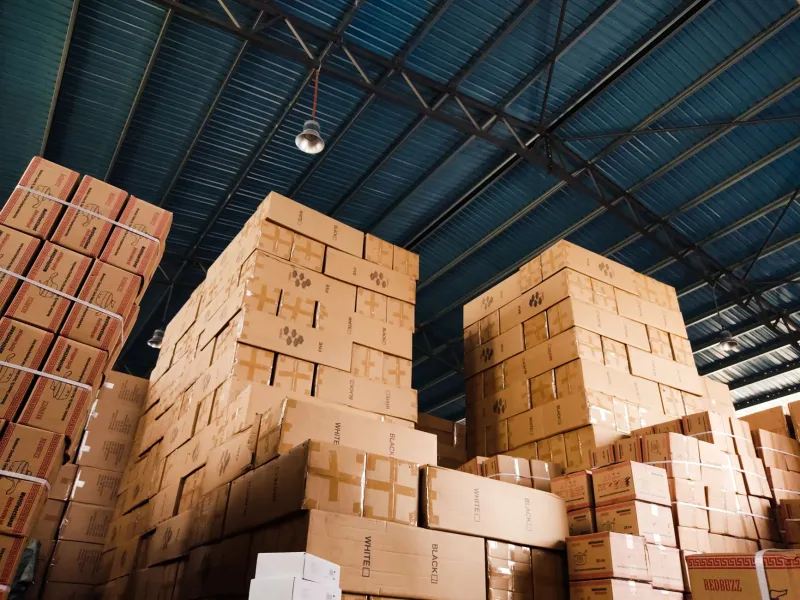
A corrugated box is not a static object. It is a fiber structure in equilibrium with the air around it. That fact is easy to forget when a specification sheet reports a clean edge crush result measured under controlled laboratory conditions. In a warehouse near Houston in August, or a distribution center in the Midwest during a wet spring, the same board can take on moisture, lose stiffness, and behave differently in a stack. For US paper buyers, the gap between a lab pass and a warehouse failure is often a missing contract clause: the humidity and conditioning requirement.
The issue is not limited to recycled corrugated. Virgin fiber is hygroscopic too. But recycled fiber adds variability that makes moisture management more important to specify carefully. Board made from mixed recovered fiber can vary in density, starch application, and liner composition. Those differences affect how quickly moisture moves through the sheet and how much strength is lost when it does. A procurement specification that addresses only basis weight, flute profile, and a single strength number leaves the moisture margin undefined.
Why a lab pass is not a warehouse promise
Standard corrugated strength tests are conditioned tests. TAPPI T402, for example, sets a reference atmosphere of 23 degrees Celsius and 50 percent relative humidity. Edge crush and burst tests are then run under those conditions. This is useful for comparing suppliers and lots on a common basis. It is not a prediction of performance in an uncontrolled building.
When relative humidity rises, paper fibers absorb water. The sheet swells, fibers become more flexible, and compressive strength falls. The effect is not linear, and it is not uniform across all board grades. A stack that performed well in a dry January may creep and lean in a humid July. Printers may see warp, feeding problems, and register issues. Converters may see delamination or poor glue bonds. The failure may appear as a customer complaint about crushed boxes, but the root cause can be a moisture specification that was never written.
This is why a humidity clause belongs in the commercial terms, not only in a technical data sheet. The clause should define the condition under which strength is claimed, the condition in which board is expected to arrive, and what happens when delivery or storage falls outside those assumptions.
Put conditioning and as-received moisture on the same page
A common mistake is to specify a strength value and assume it applies everywhere. A better approach separates two questions. First, what strength does the board deliver under the agreed reference conditioning? Second, what moisture content is acceptable when the board arrives at the buyer's dock?
The first question is answered by citing the test method and conditioning standard. For edge crush, that means TAPPI T811 or the equivalent agreed method, with TAPPI T402 conditioning. For burst, TAPPI T403 may apply. The purchase order or master supply agreement should state the method, the conditioning time, and the number of specimens. It should also state whether the reported value is a lot average, a minimum, or a statistical lower bound. A single average hides variation.
The second question requires an as-received moisture test. TAPPI T412 provides a method for moisture in paper and paperboard. The contract should specify sampling location, sample size, and handling. A practical protocol is to pull board from at least three pallets per lot, from different positions in the stack, seal samples in moisture-barrier bags, and test within a defined window. The acceptable range should be set with the supplier, based on the board grade, the converting process, and the climate of the receiving location. There is no universal number that fits every box plant and every warehouse.
Write the clause in four parts
A workable humidity clause does not need to be long, but it should be explicit. Four elements carry most of the weight.
- Reference condition. State the conditioning standard and test methods used to establish strength. Require supplier test reports to identify the conditioning atmosphere and the date of testing.
- Delivery condition. State the acceptable as-received moisture range and the sampling method. Define what constitutes a lot and how many samples are required. Require boards to be protected from rain and ground moisture during transit.
- Storage assumptions. State the buyer's expected storage environment, including whether the space is climate-controlled, what temperature and humidity range is typical, and how pallets are protected. If the buyer cannot maintain those conditions, the supplier should know before the strength claim is relied upon.
- Remedies. Define the response when board arrives outside the agreed moisture range or fails the conditioned strength requirement. Remedies can include holding the lot for re-test, replacement, price adjustment, or a corrective action request. Avoid a binary reject-or-accept clause that ignores root cause.
A model clause might read: Board shall be tested for edge crush in accordance with TAPPI T811 after conditioning per TAPPI T402. As-received moisture shall be determined per TAPPI T412 on samples drawn from at least three pallets per lot. The agreed moisture range is [X] to [Y] percent. Lots outside this range may be held pending joint review. Supplier shall provide test data for each lot and participate in corrective action if repeated deviations occur. This language is not legal advice, but it shows the level of specificity that makes the requirement usable.
The storage side of the contract
Humidity performance is a shared responsibility. A supplier can deliver board within an agreed moisture range, and a buyer can still create a failure by storing it poorly. Corrugated should not sit directly on a concrete floor. Pallets should be wrapped or covered when the building is not climate-controlled. Pallets should not be placed under roof leaks, near dock doors that stay open, or against exterior walls where condensation forms. Airflow matters. So does dwell time. First-in, first-out rotation reduces the chance that a lot absorbs moisture over months of storage.
For 2026 procurement, it is reasonable to document the buyer's storage assumptions in the contract or supplier questionnaire. If the buyer operates a humid warehouse, the supplier may recommend a different liner, a higher strength grade, or a moisture-barrier wrap. Those choices should be made before the first purchase order, not after a stack collapses.
Remedies that fit the failure
A humidity clause is only as good as its remedy. If board arrives above the agreed moisture range, the buyer should have the right to hold the lot, re-test it, and seek replacement if the conditioned strength claim cannot be met. If the deviation is marginal, a price adjustment or a requirement for additional protective packaging may be appropriate. If the problem repeats, a corrective action request should require the supplier to review its drying, starch application, and shipping protection.
The goal is not to shift blame. It is to create a predictable process for a predictable physical problem. Moisture regain is not a mysterious defect. It is a property of paper. A procurement team that writes the humidity margin into the contract is simply acknowledging that the warehouse is part of the specification.
For US buyers, the seasonal case is strong. Gulf Coast humidity, Midwest summer swings, and winter dryness in heated buildings all change the conditions under which corrugated performs. A 2026 contract that ignores those conditions is relying on luck. A contract that names the test, the moisture range, the storage assumptions, and the remedy is relying on a system.