The Single-Number Trap: Auditing Carbon Claims in US Paper Packaging Quotes
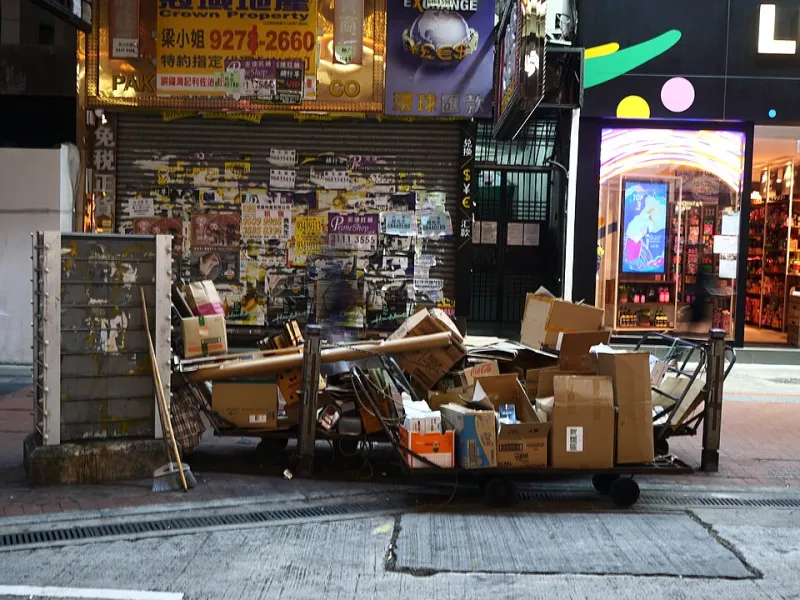
Photo: Peachyeung316, CC BY-SA 4.0, via Wikimedia Commons
A procurement team requests quotes for a printed corrugated carton and receives two responses. One supplier lists a carbon footprint of 0.38 kg CO2e per carton. The other lists 0.61 kg CO2e. The instinct is to favor the lower number. The more useful response is to ask what each figure actually measures, what it leaves out, and whether the two can be compared at all. In 2026, carbon declarations are becoming a routine attachment to US paper packaging quotes, but a single number is not a procurement decision. It is a disclosure that needs a common basis.
Start With the Functional Unit, Not the Headline Figure
Carbon-footprint claims for paper packaging often arrive without a clear functional unit. Is the figure per kilogram of paper, per finished carton, per 1,000 units, or per delivered and filled pack? Does it include printing, adhesive, coatings, pallet wrap, and transport? A declaration expressed per kilogram can reward a heavier specification that uses more fiber per box. A declaration expressed per carton can obscure whether the quote assumes a different basis weight, print coverage, or cube efficiency.
Buyers should begin by normalizing every quote to the same unit and the same packaging specification. Ask for the basis weight, recycled content, print and coating details, pallet configuration, and assumed delivery lane. If a supplier cannot state the functional unit in plain language, the number is not yet ready for comparison. It may still be a useful starting point, but it should not be scored as if it were final.
Where the Boundary Draws the Line
Most paper packaging emissions sit upstream of the converting plant: fiber production, pulping, papermaking, and the energy used to turn paper into packaging. A supplier that reports only its own Scope 1 and Scope 2 emissions may present a very small number while excluding the purchased paper that makes up most of the product. For packaging buyers, Scope 3 Category 1 purchased goods and services is usually the center of gravity, not an afterthought.
Ask whether the declaration is cradle-to-gate, cradle-to-grave, or some intermediate boundary. A cradle-to-gate figure stops before distribution, use, and end-of-life. That is not necessarily a flaw, but it cannot be compared with a cradle-to-grave figure without adjustment. The GHG Protocol Product Standard, ISO 14067, and product category rules each impose different expectations. The label matters less than whether the supplier can explain the boundary consistently and provide the underlying report.
Biogenic Carbon Is Not a Free Pass
Paper fiber begins as plant material, and that biological origin complicates carbon accounting. A tree absorbs carbon as it grows, but forest management, harvest cycles, land-use change, and the fate of the fiber after use all affect the net result. The GHG Protocol requires biogenic carbon to be reported separately rather than folded into a single total as if it were neutral. Treating all biogenic carbon as zero is a common shortcut that can flatter a paper packaging claim without proving a lower climate impact.
Recycled fiber changes the question again. Recycled content can reduce some upstream burdens, but collection, sorting, deinking, and transport still carry emissions. Suppliers should state whether recycled content is post-consumer or pre-consumer and how they allocate burdens between virgin and recycled streams. Buyers do not need to resolve every methodological debate in a quote review, but they should resist declarations that present biogenic carbon as an automatic benefit with no assumptions attached.
Transport, Grid, and End-of-Life Assumptions
Paper packaging is bulky, and cube efficiency matters. A supplier may assume a full truckload traveling a short distance, while the actual procurement pattern involves mixed loads, regional distribution centers, and return legs. Ask for the transport mode, distance, load factor, and whether outbound delivery to the customer is included. For imported paper or converted packaging, ocean freight and port handling belong in the boundary if the declaration claims to cover the delivered product.
Electricity assumptions also deserve scrutiny. Mills and converting plants draw power from regional grids with different emissions profiles. A supplier using a national average, a location-based factor, or market-based renewable energy instruments may produce very different results for the same physical operation. The declaration should say which approach was used and whether renewable energy certificates or power purchase agreements are claimed. Those instruments can be legitimate, but they should not be invisible.
End-of-life assumptions are equally consequential. A recycling rate pulled from a national average may not reflect the actual municipal system where the packaging is sold. Landfill methane, incineration, and fiber loss during recycling all change the result. If a supplier claims a cradle-to-grave benefit from recyclability, ask for the end-of-life scenario, the geographic basis, and the assumed recovery rate.
RFQ Questions That Force Comparability
A carbon declaration becomes useful when it is paired with a short set of procurement questions. Ask each supplier to identify the functional unit and packaging specification. Request the system boundary and the standard or product category rule used. Ask whether the data is primary or secondary, what year it represents, and whether a third party verified it. Request the treatment of biogenic carbon, recycled content, transport, grid factors, and end-of-life. Ask for the uncertainty range and the underlying report or environmental product declaration.
These questions do not need to become a research project. A supplier with a credible declaration should be able to answer them in a page or two. A supplier that can only provide a marketing summary is signaling that the number is not yet procurement-grade.
Red Flags in a Carbon Claim
Be cautious when a quote presents a single carbon figure with no methodology, no data year, and no boundary. Treat 'carbon neutral' claims without a documented reduction pathway and verified offsets as a separate marketing assertion, not a footprint result. Watch for comparisons against an unspecified baseline, claims that recyclability automatically means lower carbon, and declarations that exclude upstream fiber while describing the product as low-carbon. A refusal to share assumptions is more telling than a high number.
A Verification Checklist for Buyers
Before a carbon figure enters a scorecard, confirm that it uses the same functional unit and specification as the competing quote. Confirm that the system boundary is comparable. Check the data year and whether the figure reflects current operations. Verify whether the declaration has been independently reviewed. Confirm that biogenic carbon is reported separately and that recycled content allocation is explained. Review transport, grid, and end-of-life assumptions. Ask for uncertainty and insist on a pathway for updated disclosures.
The goal is not to find the lowest number in the market. It is to find the supplier whose number you can defend, compare, and improve. A credible carbon declaration should make a quote more transparent, not more mysterious. For green-minded companies sourcing circular fiber, the carbon tag on the carton is best treated as the beginning of a procurement conversation, not the end of one.