When Fiber Loses: A Reuse-First Procurement Test for US Packaging Buyers
The paper-only packaging strategy has a blind spot. It assumes that replacing plastic with fiber automatically improves circularity. Sometimes it does. Sometimes it simply swaps one single-use system for another and calls the substitution sustainable. For green-minded US buyers, that is not good enough in 2026.
This is an opinion, but it is a procurement opinion. The point is not to abandon paper. The point is to stop treating paper as a default answer before the use case has been tested. Fiber is often the right choice. But a buyer who specifies paper without asking whether reuse would perform better is not making a circular decision; that buyer is making a material decision and dressing it up as strategy.
The assumption that needs pressure-testing
Paper has real advantages. It is familiar, broadly recyclable in many US markets, and often preferred by consumers who are trying to avoid plastic. Those advantages matter. But single-use fiber also carries impacts that are easy to overlook: virgin pulp demand, water use, weight in transport, coatings and barriers that complicate recycling, and low actual recovery in markets where collection is inconsistent.
A paper package is circular only when the fiber is recovered and used again, or when the application genuinely supports composting in a managed system. If the package is contaminated, laminated, or routinely landfilled, the material story is weaker than the marketing suggests. The paper-only trap is the belief that the substrate alone settles the question.
Where reuse beats single-use fiber
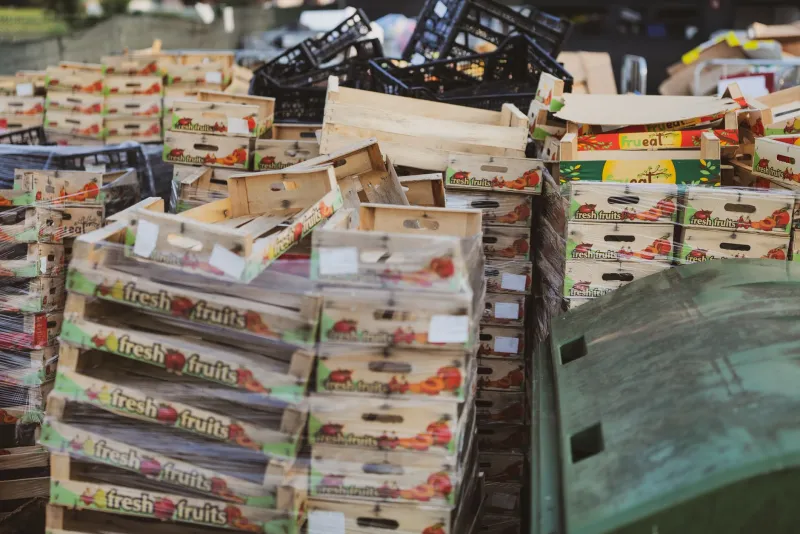
Reuse systems perform best when the loop is tight. That means stable routes, predictable volumes, high cycle counts, and a party that controls the return leg. Business-to-business transit packaging is often a better candidate than consumer-facing e-commerce. Reusable crates for produce, dairy, bakery, and regional grocery distribution can replace single-use corrugated in closed-loop networks where the asset is tracked and returned.
Hybrid systems deserve more attention than they get. A durable reusable outer container with a right-sized fiber cushion or divider may outperform a fully single-use paper system on cost per use and waste, while still using fiber where it adds value. The procurement question should not be paper or plastic. It should be which material does which job, and how many times.
Where paper remains the right call
Paper is often the better choice for long-distance shipping, open-loop distribution, hygiene-sensitive applications, and cases where return logistics would be costly or unreliable. Right-sized fiber can reduce void fill, lower cube utilization waste, and avoid the heavier asset burden of a reuse system that never reaches enough cycles to break even.
The mistake is not choosing paper in those cases. The mistake is choosing paper without documenting why reuse was rejected. A procurement file that says paper was selected because it is recyclable is thin. A file that says reuse was evaluated, the return rate was projected below break-even, and the fiber format was selected for transport efficiency is a defensible circularity decision.
A five-test decision framework
Buyers should put every packaging format through a reuse-first screen before defaulting to single-use fiber.
1. Cycle count and break-even
Ask how many trips the reusable asset must make to beat the single-use alternative on total cost and carbon. Then ask whether the supply chain can realistically deliver that cycle count. A reuse system that loses assets after three trips is not circular; it is a heavier single-use system.
2. Reverse logistics and loss rate
Who owns the return leg? Who cleans the asset? What happens when a crate ends up at a distribution center with no backhaul? Reuse is a logistics commitment, not just a packaging purchase.
3. Contamination and cleaning
Food, grease, moisture, and labels can turn a reusable asset into a cleaning burden. Buyers should compare the water, energy, and chemical load of cleaning with the impacts of single-use fiber. Reuse is not automatically lower impact if the cleaning loop is inefficient.
4. Cube, weight, and transport
A reusable crate may be heavier and bulkier than corrugated. That can raise transport emissions and reduce pallet efficiency. The comparison should be per delivered unit, not per package.
5. End-of-life and policy signals
EPR fees and recyclability rules can favor single-use fiber, but those signals do not capture every waste or carbon trade-off. Buyers should use policy as one input, not the only input. A package that earns a favorable fee category can still be the wrong choice if it is used once and discarded.
What to write into RFPs
Procurement teams should require suppliers to present a reuse-first alternative alongside the paper option. The RFP should ask for total cost per use, projected return rate, cleaning protocol, asset tracking, transport impacts, and end-of-life plan. It should also ask the supplier to disclose the assumptions behind any recyclability or compostability claim.
Do not accept paper as a sustainability answer by itself. Accept it when the evidence shows it is the better system for the application. That may mean paper wins in many categories. It should not mean paper wins by default.
The procurement posture for 2026
Specify outcomes, not materials. Pilot reuse where the loop is tight enough to test. Keep fiber where it performs. Reject blanket paper-only mandates that ignore return logistics, contamination, and transport. The circular future is not a single material. It is a set of systems that keep assets in use and keep claims tied to evidence.
For US buyers, the practical move is to add a reuse-first screen to every paper packaging review. If paper still wins after that screen, specify it with confidence. If it does not, ask the supplier for the system that does.