What PFAS-Free Must Prove in 2026: A Procurement Checklist for Paper Food Packaging
The phrase PFAS-free has become common in paper packaging bids. For procurement teams, however, it is not a specification until it is documented, testable, and enforceable. In 2026, state-level restrictions and customer expectations make PFAS screening a sourcing control rather than a sustainability footnote. Food-service paper and molded-fiber packaging deserve particular attention because they contact food and often rely on grease or moisture barriers.
Start With a Definition, Not a Label
Buyers should define PFAS by reference to the applicable state law, customer standard, and product use. The definition should distinguish between intentionally added PFAS and incidental presence. It should also identify the exact product components in scope: base fiber, coatings, barrier layers, inks, adhesives, liners, lids, and any secondary packaging.
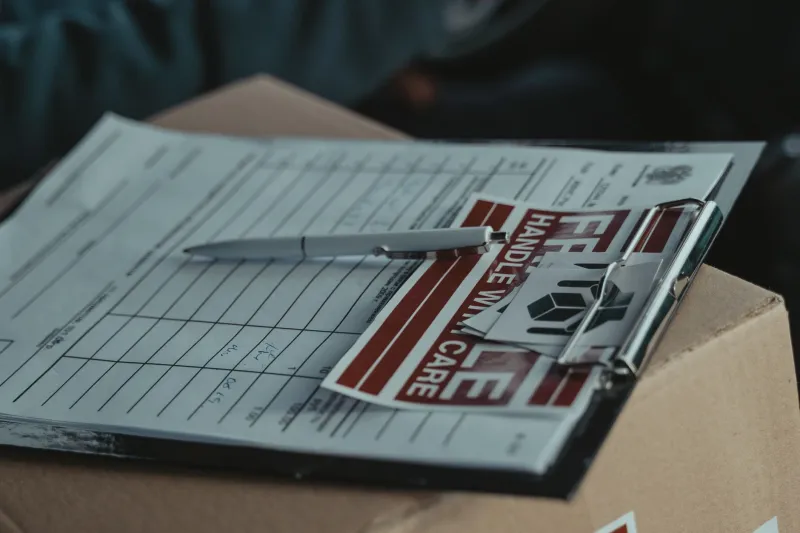
A company-level statement that the supplier avoids PFAS is not enough. Procurement should request a product-level declaration for each SKU and manufacturing site. Where trade secrets are a concern, a confidential formulation disclosure or a certificate naming PFAS classes and functional uses may be appropriate. The declaration should be dated, version-controlled, and signed by an authorized representative.
Treat no PFAS added and PFAS-free as different claims. The first may refer only to intentional formulation choices; the second implies a stronger evidentiary standard. The request for proposal should state which claim the buyer requires and what evidence will be accepted.
Request Evidence That Matches the Risk
A practical supplier questionnaire should go beyond yes or no answers. Ask whether the product has been assessed for PFAS, which standard or method was used, and whether any PFAS are intentionally added. Require the basis for the answer: sub-supplier declarations, formulation records, laboratory reports, or a combination of these.
Useful questions include:
- Which laboratory performed the work, and what accreditation does it hold?
- What method was used, what detection limits were reported, and what sample preparation was applied?
- Was the finished product tested, or only raw materials and coatings?
- Has the formulation or sub-supplier changed since the last declaration?
- Which states or customers have accepted the declaration or test report?
Safety data sheets are usually insufficient. They may not list low-concentration additives, may rely on trade-secret exemptions, and are not designed to prove regulatory compliance for food-contact paper packaging. Buyers should also ask about the fiber supply chain and any water- or oil-repellent treatments applied to molded fiber, since those treatments are central to PFAS risk.
Use Testing as a Check, Not a Substitute
Analytical testing can strengthen a declaration, but it cannot carry the whole burden. Targeted liquid chromatography with tandem mass spectrometry can identify known PFAS compounds, yet it will not catch every fluorinated substance. Total organic fluorine or extractable organic fluorine screening can indicate the presence of fluorinated compounds, but it does not identify individual PFAS or prove that a product is compliant.
Procurement teams should ask laboratories to state the method scope, reporting limits, and suitability for food-contact paper and coatings. Testing should cover the finished product and, where risk is high, key barrier coatings or raw materials. Composite testing may be efficient, but it can dilute a problem in one component. Worst-case SKU testing is often more informative than a single generic report.
A defensible testing cadence includes pre-qualification testing, annual verification, retesting after any reformulation, and occasional random lot checks. Chain-of-custody documentation should accompany samples so that results can be tied to a specific production period and facility.
Map State Documentation Requirements
There is no single national packaging standard for PFAS. Restrictions and reporting obligations vary by state, product category, and effective date. A national buyer should build a state matrix that records the obligation, the products in scope, the evidence required, the responsible owner, and the review date. California, New York, Washington, Maine, and Minnesota are among the states that have enacted restrictions or reporting requirements affecting food packaging or broader product categories. Buyers should confirm current scope and effective dates with counsel rather than relying on summaries.
If a product is sold nationally, the specification should be designed to meet the strictest applicable state requirement or customer standard. Keep dated declarations and test reports organized by SKU, supplier, and facility. Contract terms should require record retention for a defined period and prompt notice of any regulatory inquiry or test failure.
Put the Claim in the Contract
A PFAS specification becomes useful only when remedies are attached. The contract should define PFAS, intentionally added, food-contact paper packaging, and applicable law. Supplier representations and warranties should state that no regulated PFAS are intentionally added, that the product complies with identified state requirements, and that all declarations and test reports are accurate and complete.
Buyers should reserve the right to test products before shipment and at random after delivery. The agreement should address who pays for testing, what happens if a nonconformance is found, and how corrective action and recall support will be handled. Change-control provisions should require notification before any reformulation, sub-supplier change, or new coating is introduced.
Indemnification, audit rights, and flow-down obligations to sub-suppliers are also important. A general promise to comply with applicable law is weaker than a specific representation tied to named substances, named states, and named evidence. The contract should make clear that a missing or inaccurate declaration is a breach, not an administrative oversight.
A Practical Screening Sequence
A disciplined buyer can screen paper packaging in five steps. First, require a product-level PFAS declaration and test summary in the request for proposal. Second, score suppliers on the completeness of the declaration, the suitability of the test method, and the clarity of the state matrix. Third, validate the highest-risk SKU with an independent laboratory. Fourth, write representations, testing rights, notification duties, and indemnities into the contract. Fifth, refresh declarations annually and after any change in formulation or supply chain.
PFAS-free is a chain-of-evidence claim. Buyers that define the term, request product-level proof, and attach consequences to inaccurate claims will be better positioned than those that rely on marketing language. In a procurement environment shaped by state restrictions and customer scrutiny, the strongest sustainability claim is the one that can survive an audit.