The Seal Is the Specification: A 2026 Buyer’s Protocol for Paper Tape Performance
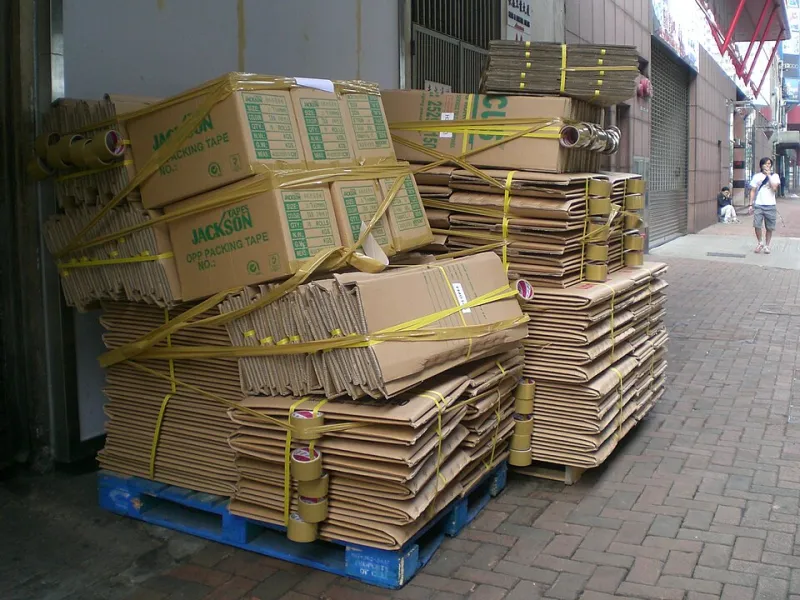
Photo: No machine-readable author provided. KennethTom~commonswiki assumed (based on copyright claims)., CC BY-SA 3.0, via Wikimedia Commons
Paper tape is often presented as a simple substitution: replace a plastic film tape with a paper-faced product, keep the same carton, and claim a circular improvement. In practice, the seal is a functional component. It must hold through the packing line, survive the distribution environment, and remain compatible with the paper recovery stream. A tape that photographs well on a kraft box can still fail on a dusty recycled board, a cold pallet, or a dispenser running at production speed. For US procurement teams in 2026, the task is to qualify paper tape as a specification, not as a symbol.
Begin With the Board and the Conditions
The first variable is not the tape but the substrate. Recycled corrugated board can vary in surface sizing, dust, and moisture content. A tape that adheres cleanly to a virgin-kraft sample may not bond to a board with loose fiber or a high recycled content. Buyers should obtain production board samples from the actual corrugator or converter, not a pristine demonstration sheet. The qualification sample should represent the board grade, liner combination, and print coverage used in the packing operation.
Conditions matter as much as board. A carton sealed in a dry, temperate packing room may travel through a cold chain, a humid warehouse, or a parcel network that exposes it to vibration and handling. Paper tape is hygroscopic; its dimensional stability and adhesive performance can change with moisture. Water-activated tape also needs a controlled water application and a cure window before the carton is handled. Pressure-sensitive paper tape depends on clean contact and adequate pressure. Neither type should be qualified on a single bench test in a comfortable office.
Test Adhesion Where It Fails
A practical protocol should test adhesion under the conditions that create failures. For dusty recycled board, lightly condition the board to the plant environment and test tape on a representative printed and unprinted surface. Record whether the failure mode is adhesive transfer, cohesive failure within the adhesive, or fiber tear from the board. Fiber tear is not the only acceptable result, but it is a useful indication that the bond is stronger than the board surface. A tape that peels cleanly from a dusty liner may still be acceptable for some applications, but the buyer should know that the seal depends on adhesive rather than board fiber.
For cold pallets, condition sealed cartons at the lower end of the expected temperature range and then test the seal after a defined recovery period. Condensation is a separate stress: a carton that moves from a cold room to a humid dock can collect moisture on the board and tape. The buyer should ask whether the supplier has tested adhesion after wetting or high-humidity exposure, and whether the tape’s adhesive is formulated for those conditions. A paper face stock does not make the adhesive immune to cold or moisture.
For high-speed packing lines, test the tape in the dispenser and at the line rate. Water-activated tape requires the correct water temperature, volume, and dwell time; too little water can leave a dry bond, while too much can weaken the paper. Pressure-sensitive tape requires consistent application pressure and a clean cut. The test should include start-up, steady run, and stop-start cycles, because operators often judge tape by how it behaves when the line is not steady.
Match the Dispenser to the Labor Reality
Procurement teams should treat dispensers and labor as part of the tape specification. A tape that performs well in a hand-held dispenser may not work in a fixed automatic dispenser, and a tape that requires two hands can slow a packing station. Ask for the dispenser model, tape width, core size, and roll length that the supplier recommends. Run a timed trial with the actual operators who will use it. Observe refill time, tape threading, blade wear, and ergonomic reach. If the switch adds seconds per carton, the labor cost can exceed the material savings.
Training is also a procurement issue. Paper tape is not automatically intuitive. Water-activated tape needs a consistent wetting routine; pressure-sensitive tape needs firm pressure across the full width. A supplier that provides only a sample roll and a spec sheet is not providing a complete implementation. The buyer should request a short commissioning plan: line trial, operator training, troubleshooting guide, and a named technical contact.
Verify Repulpability, Not Just Paper Content
The repulpability question is where paper tape claims often outrun evidence. A paper face stock and a paper core do not guarantee that the adhesive or coating will disperse in a repulping system. Water-activated tapes with starch-based adhesives are often designed for repulpability, but formulations vary. Pressure-sensitive paper tapes may use adhesives that are not compatible with some mills. The buyer should request a repulpability test report, not a sustainability icon, and should confirm the test method and the mill or laboratory that performed it. The report should identify the tape construction, adhesive chemistry, and any release coating.
The buyer should also ask how the tape behaves in the intended recovery stream. A regional mill may accept paper tape in mixed paper bales, while a different mill may reject it because of adhesive residue. The procurement team should align the tape specification with the actual end market, not a generic “recyclable” claim. If the tape is marketed as plastic-free, ask for a declaration of composition. If it is marketed as repulpable, ask for the test report and the conditions under which the claim applies.
Build the Supplier File
A qualified paper tape supplier should provide more than a price and a sample. The file should include: the tape construction and basis weight; adhesive type and application method; recommended board surfaces; dispenser specifications; shelf life and storage conditions; lot code and traceability; repulpability test report; and a declaration of composition. For water-activated tape, include the water application range and cure time. For pressure-sensitive tape, include the application pressure range and temperature limits.
The buyer should also define acceptance criteria before the trial. That may include fiber tear on a stated percentage of test samples, seal integrity after cold conditioning, no lifting after a defined vibration test, and successful run at line speed. The criteria should be written into the purchase order or supplier quality agreement. A tape that fails a criterion should not be accepted on the grounds that it is “more sustainable.” Sustainability is a reason to qualify a product, not a substitute for qualification.
The Seal Is the Specification
Paper tape can be a sound choice for US companies that want to reduce plastic in packaging and keep fiber in the recovery stream. But the circular case depends on performance. A tape that fails on the dock creates rework, returns, and replacement packaging—outcomes that erode the environmental benefit. The procurement protocol should begin with the board, test the conditions that cause failure, fit the dispenser and labor model, verify repulpability with documentation, and write acceptance criteria into the contract. The seal is not an afterthought. It is the specification.