Stover, Straw, and Signatures: Vetting Agricultural Residue Paper Before It Enters the Spec
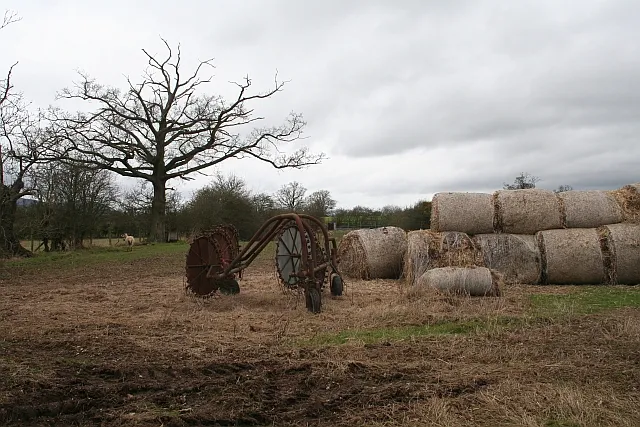
Photo: Bob Embleton, CC BY-SA 2.0, via Wikimedia Commons
Agricultural residue paper has an appealing story: fiber drawn from stalks, straw, and other crop leftovers rather than from a forest. For US packaging buyers, that story can align with circularity goals and regional sourcing priorities. It can also become a procurement blind spot if the word “tree-free” arrives without a documented chain from field to bale to mill to finished sheet. The right response is not skepticism for its own sake. It is a due-diligence file that makes the claim auditable.
Start With a Narrow Definition
“Tree-free” is a marketing term before it is a specification. A buyer should translate it into contractual language that identifies the feedstock, the percentage of fiber content it represents, and the point in the supply chain where the claim is substantiated. Does the paper contain agricultural residue only, or a blend with recycled fiber and virgin wood pulp? Is the residue a primary input or a minor additive? Is the claim made at the mill level, the converter level, or the brand level?
These distinctions matter because a packaging specification can absorb an ambiguous claim and repeat it for years. Procurement teams should require a written fiber composition statement for each grade under consideration, including the agricultural residue type, its share of total fiber, and the country or state of origin. If a supplier cannot state those facts plainly, the claim is not ready for a specification.
Map the Feedstock Trail
The first diligence question is not “Is it sustainable?” but “Where does it come from, and who controls it?” Agricultural residue supply is seasonal, regional, and tied to crop cycles. A credible supplier should be able to name the crop, the growing region, the collection window, and the entity that owns or aggregates the residue. For US buyers, that may mean corn stover in the Midwest, wheat straw in the Plains, or rice straw in specific growing areas. The exact geography matters less than the evidence behind it.
Buyers should also ask about competing uses. Residue left in the field can support soil organic matter, moisture retention, and erosion control. Some residues have established markets as animal bedding, feed, or compost inputs. A tree-free paper claim does not automatically resolve those trade-offs. A responsible supplier should be able to explain how residue removal is managed, whether removal rates are capped, and whether the sourcing program includes any soil-health or agronomic guidance.
The feedstock trail should extend to aggregation and storage. Who bales the residue? How is it protected from moisture and contamination? Is it stored outdoors, and what quality controls prevent dirt, plastic, or mold from entering the fiber stream? These are practical questions, not philosophical ones. Contaminants that enter at the bale can reappear as defects, odors, or downtime at the mill.
Verify the Mill and the Certificate
A mill certification is useful only when its scope matches the claim. Buyers should request the certificate itself, not a logo, and confirm the certified entity, the standard, the scope of certification, and the validity period. If the supplier relies on a chain-of-custody standard, the buyer should understand whether the agricultural residue is covered by that standard or sits outside it. Some certification schemes were designed around forest fiber and recycled content; their application to alternative fibers may be partial or newly developed.
Ask for the mill’s most recent audit summary and any corrective actions relevant to fiber sourcing. If the supplier makes a specific environmental claim, such as reduced water use or lower land-use pressure, ask for the basis of that claim and whether it has been independently reviewed. Neutral procurement does not require perfect data, but it does require a clear distinction between verified facts, supplier estimates, and marketing language.
Test Performance Before You Commit Volume
Alternative-fiber papers can perform well, but they are not drop-in equivalents for every wood-pulp grade. Buyers should evaluate the attributes that matter to the application: tensile strength, tear resistance, burst strength, stiffness, porosity, brightness, opacity, moisture sensitivity, odor, and printability. For food-contact packaging, the supplier should provide the relevant compliance documentation and clarity on any coatings or additives.
A pilot run is often more informative than a certificate alone. Run the candidate grade on the actual converting line, at production speed, with the actual ink, adhesive, and coating system. Track breaks, waste, reject rates, and finished-pack performance. If the paper will be used in humid conditions or cold storage, test it there. If it will carry weight, test the loaded package rather than the sheet. The goal is not to prove that agricultural residue paper is inferior or superior. It is to establish whether this specific grade meets this specific specification.
Write the Claim Into the Contract
The strongest due-diligence checklist is incomplete if it stays in a spreadsheet. Contract language should define “agricultural residue fiber,” require written attestation of fiber composition by grade, and give the buyer a right to request supporting documentation on reasonable notice. Include notification requirements for changes in feedstock source, mill location, or certification status. A change from one residue stream to another can alter performance and sustainability attributes, so it should trigger review rather than pass silently through the supply chain.
Consider sampling and testing rights, especially for incoming lots. Specify how claims will be substantiated if a discrepancy arises, and include remedies that are proportionate to the risk. Avoid open-ended language such as “sustainable agricultural fiber” unless it is tied to defined evidence. A useful contract clause is specific enough that a mill, converter, and buyer can all agree on what would prove compliance.
Make the Decision on Evidence, Not Aesthetics
Agricultural residue paper can be a meaningful part of a circular procurement strategy, particularly when it uses regional byproducts and displaces higher-impact inputs. But tree-free is not a synonym for low-impact, and it is not a performance guarantee. US buyers should treat it as a fiber option that earns its place in the specification through traceability, certification, testing, and enforceable claims. The residue may come from the field, but the procurement decision should come from the file.